
The real installation
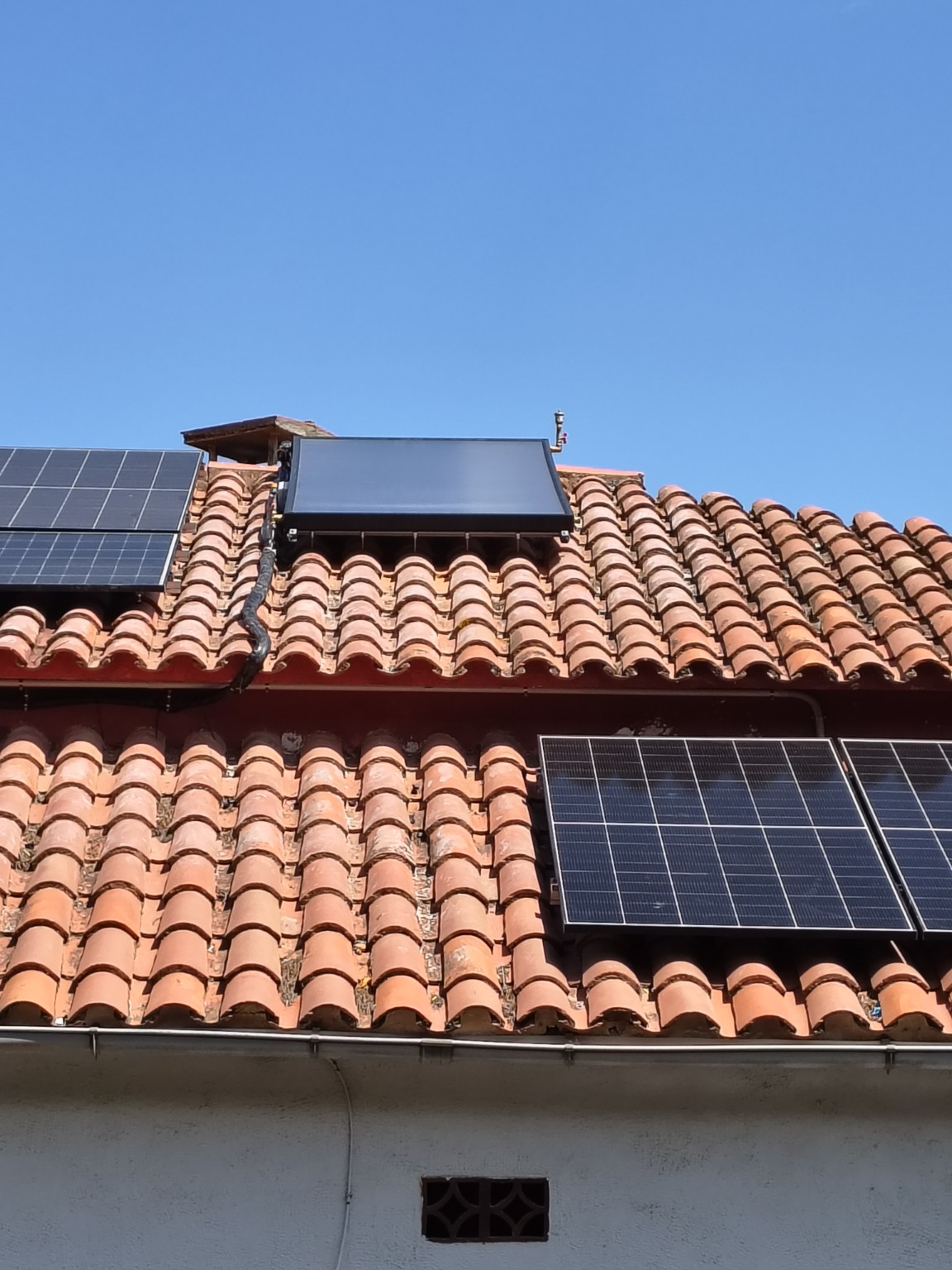
The roof has a solar thermal collector beside several photovoltaic panels. Both use sunlight, but the thermal collector works with a hydraulic circuit that carries heat to a storage tank.
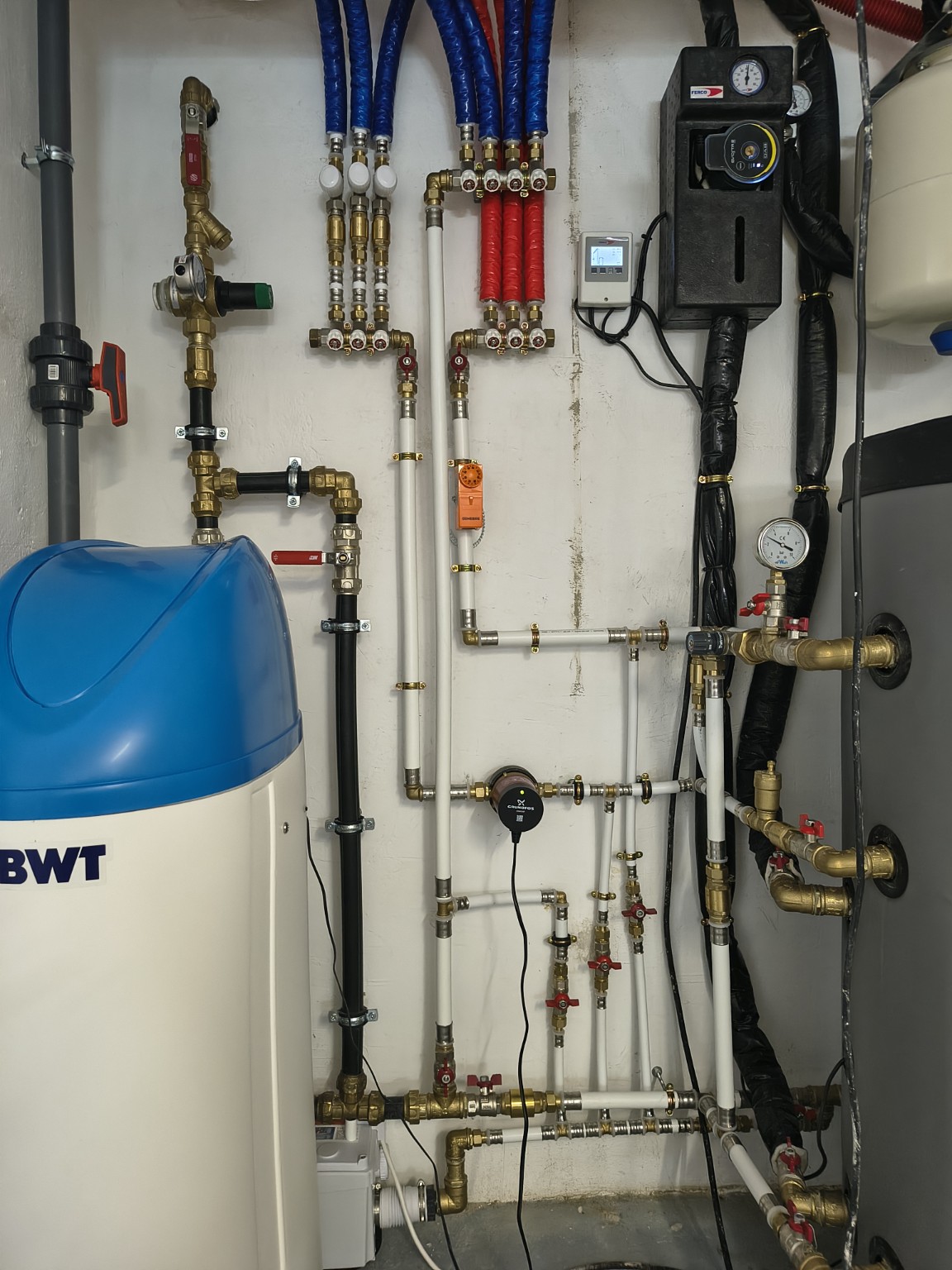
The plant room brings together pipes, pumps, valves, instruments and controls. An exterior photograph is not enough to reconstruct the entire circuit: the pipework, schematic and controls must also be checked.
Appearance alone does not answer the question
Two collectors that look alike can have different internal flow paths. Connections on the same side may therefore be correct for one model but not the intended arrangement for another.
- Identify the exact collector model.
- Read the installation manual for that model.
- Check how many collectors are connected in the same row.
- Verify the inlet, outlet, air vent and temperature-sensor positions.
Compare the two layouts
The animation shows the geometric difference between flow and return on the same side and connections on opposite sides. It is a visual aid, not a product-specific installation diagram.
What two manufacturers state
Bosch states that the double-meander absorber in the cited range permits same-side series connection of up to five collectors. Buderus states that the Logasol SKT 1.0-S can use up to ten collectors in one row, with flow and return on the same side for rows of up to five. These are model-specific examples, not a universal rule.
How to review an installation
- Read the nameplate or label to confirm the manufacturer and model.
- Compare the installation with the manual's hydraulic diagram.
- Confirm the required collector-sensor and air-vent positions.
- Have a qualified professional check pressure, flow rate, insulation and controls.
If there is any doubt, the equipment manual, the installation design and a qualified technician's inspection take priority. This guide does not replace those instructions.